

Unlearning the Script: Creativity, Chronic Pain, and Starting Over
Jenna Struble Answers the AGECRAFT Questionnaire


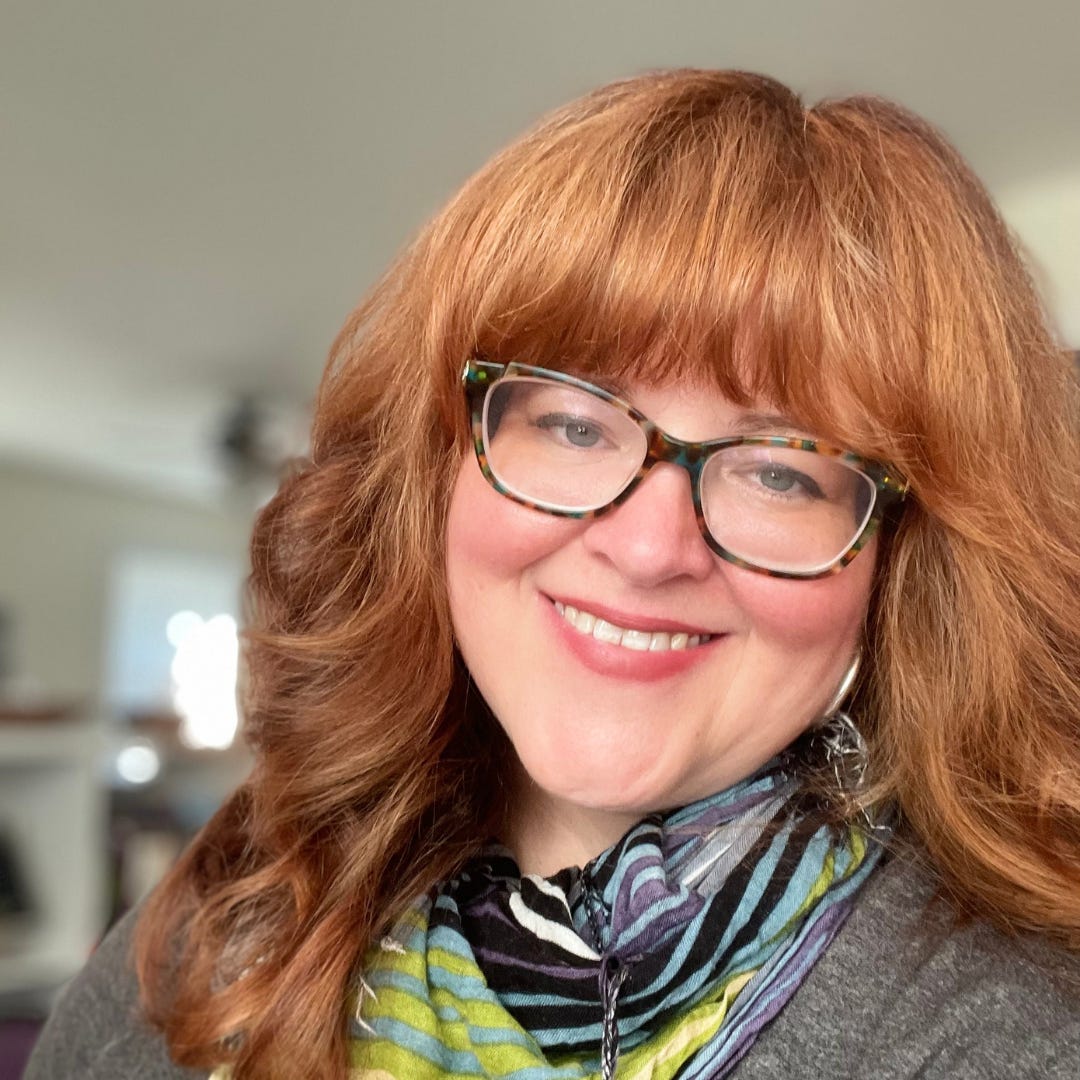
Name: Jenna Struble
Pronouns: she/her
Age: 53
Jenna Struble is a queer, creative artist who writes, tells stories, and makes pretty things. She has led many lives in theater, circus, and crisis advocacy, as an educator, arts and teen program director, and nonprofit leader and consultant. A native Texan, she enjoys living in southeast Vermont with her two fur babies, J.F. and Ellie. Jenna enjoys creating and adventures of all sizes, doing quaint Vermont-y things with friends, and volunteering in her community.
Please answer the following (each answer should be no more than 200 words):
What’s currently keeping you up at night (existential dread, grocery lists, life epiphanies, imaginary arguments, or all of the above…)?
Like a lot of us, the news around the world keeps me up at night. I refuse to be helpless, so I stay involved at the civic level, focus on relationships, and do what I can.
I’m also experiencing the longest period of unemployment of my life. The first two months, I was totally lost and scared. I didn’t know what the hell I was going to do or where to start. It’s taken a real intentional approach of therapy, understanding my brain and how it works, getting on the right medication, and engaging in a practice of meditation and creative arts.
In examining my career, I could see patterns that did not serve me. I realized they were linked to beliefs I had about myself from past trauma. EMDR therapy has been extremely helpful, and I can feel a shift. I also start the day with a combination of Buddhist meditation and witchy ritual, giving me clarity, self-compassion, and confidence to make decisions. Returning to a creative practice has helped me rediscover myself after losing my identity to career-driven hyperfocus. It’s been the fuel I needed to come back to myself.
What valuable lessons have you learned and unlearned from your ancestors? (Family, cultural, chosen, or imagined.)
My whole life has been unlearning patriarchal programming of being the supportive female in not only relationships but in the workplace. I have to consciously not sacrifice my happiness and comfort to benefit others. I swore I would not be a housewife like my mom and her mother before her. But even with a career, working long hours, I still thought it was on me to come home, cook, clean up and manage the household - leaving me no time or energy for myself or my creative life.
It took the pandemic lockdown for me to finally learn to ask my (then) partner for what I needed and to find the value in work-life balance. Even though I grew up with friends of all races and backgrounds, there were some white supremacist beliefs I had about how I needed to help people of color when they didn’t want or need my help. I also had to unlearn the “bootstrap theory” of my parents. That doesn’t work when entire systems are designed to keep entire populations oppressed.
Living abroad also opened my eyes to how we have been indoctrinated with American exceptionalism. Living in countries with free healthcare, a livable wage, mandatory vacation time, and no fear of retirement really let me know we have so much work to do as a nation.
Where are you in the liminal space of age and/or identity right now?
I am in mid-life, embracing my full feminine power and practicing more creativity and centeredness. I identify confidently in that age range, but don’t limit myself with “I’m too old” baggage that doesn’t serve me. Age is a mindset. Living in a community with a majority of people over 65 helps me see the vast spectrum of how to age well.
My body holds me back, but my will and my mind keep me moving forward. And the work on my body is ever evolving. If we had universal healthcare, I would be in a lot different shape and would perhaps not be living with chronic pain and limited mobility. But that is not reality. So I do what I can, and I have eliminated the fear and stigma that kept me from asking for accommodations.
From the eight questions below, select and answer FIVE (each answer should be no more than 200 words):
If you were a ghost, who would you haunt—and how would you let your presence be known (Smoke, rattling chains, moving furniture)? PASS
What’s a place, habit, or moment that reliably feels a little bit enchanted to you?
The town I live in can be quaint and enchanting AF. It is a slow life that allows me to pause and see the enchantment of small moments alone or with others. Magic is found in local arts programming, being outdoors hiking or swimming in the river, a cold naked sauna with the ladies, delicious food, and community events.
Recently, Transom Media came to our town to produce a storytelling event and give a two-day free workshop. I was selected along with nine others. The event was one of the largest I’ve seen in town, with 400 sold-out seats and 100 standing room only tickets. There was a moment when we were all seated, lights were still up, musicians on stage, the emcee off stage going over his notes — and suddenly, without a noticeable prompt —it became totally quiet. Over what seemed to be a silent minute or two, we all just existed with each other. It felt bigger than all of us. We were truly in community. And as the music started, it felt like we all took in a breath together for a night of truly moving stories from this small town in Vermont.
What did you believe you were “running out of time” for—and how do you see that differently now?
After my divorce, I thought I was running out of time to love again. That turned out not to be true. I had two short but lovely relationships last year and enjoyed every minute of them. We were not meant to last, but I felt love, and I know I can again in my future.
What are you learning to live alongside, rather than change or “fix”?
My neurodivergence. My whole life, I thought something was wrong with me. It took me longer, I worked harder, and still felt like it wasn’t enough. But in recent months, after working with my doctor and my therapist, I’ve come to realize I have all the long-term signs of ADHD and was not diagnosed. Good medication and some techniques are helping me. But the best help of all was just realizing and embracing it, which gave me a path forward.
When/Where have you (quietly or loudly-both count) refused the script you were handed? PASS
What brings you power, pleasure, or joy that once felt impractical, indulgent, or “too much”? PASS
What bodily investment do you spend time or money on that others might call “vain,” but you know is actually about visibility, ritual and power?
My hair. It’s expensive as hell, but it is the one thing that helps me feel young and beautiful. I never leave the house without a compliment.
Here at AGECRAFT After Dark, we view aging as initiation and empowerment—but let’s be honest it’s not all glow-ups. What part of aging genuinely sucks for you right now?
Osteoarthritis, sagging skin, the inability to lose any weight, not being able process food and alcohol like I used to, and having to be really intentional about sleep.
The weight used to be kind of empowering to me - made me feel unique and kind of sexy around my thinner friends. But now, I feel like a burden when we are together, and that is depressing to me. Losing weight for me is more successful with medication, but with inconsistent insurance/health coverage, it’s been impossible to be consistent. I have also learned that obesity is a disease and a disability, but the health care industry is still treating it like a willpower issue. Without weight loss, osteoarthritis is painful and inoperable.
Pain management is also a struggle. Living this way the past few years has allowed me to see the world for the truly disabling place it is, and I have had to reconcile with being disabled in a lot of ways. I honestly do think about it every day, multiple times a day. All of this has been very challenging to my mental health, and ways I help myself live with disability add to overall expenses.
Embracing the disability has helped me be better about asking for what I need. It influences decisions for my future to make sure I am working in an environment that will support and encourage my health goals of losing enough weight to have knee replacement surgery and recover well.
 | A guest post by
|